
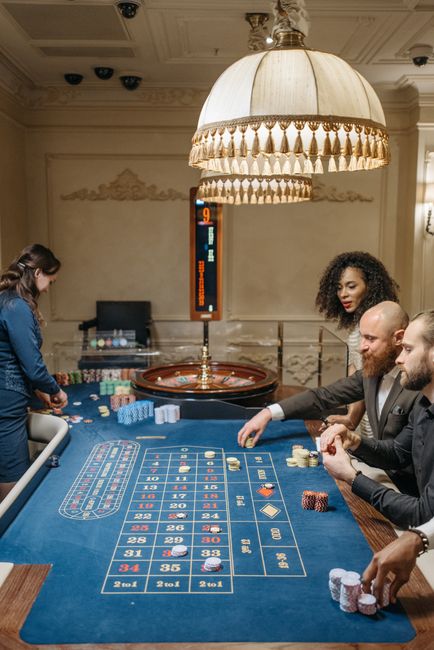
Slots, Poker, and the Real Math Behind iGaming Wins
Ask ten gamblers why they play and you'll get ten different answers: the thrill, the escape, the dream of a life-changing payout. Ask them how the games actually work, and the room goes uncomfortably quiet. That gap between enthusiasm and understanding is exactly where casinos make their money. Whether you're spinning slots at 3 a.m. or grinding a poker table on a Sunday afternoon, the players who last aren't the luckiest ones. They're the ones who understand what they're actually up against.
The House Edge Isn't a Scam, It's a Business Model
Every game in an iGaming lobby is priced. Not with a sticker, but with a mathematical advantage baked into the rules. That's the house edge, and it's not some hidden trick, it's the reason the lights stay on.
The numbers vary wildly depending on what you play: See saowin.za.com for a side-by-side comparison.
- Blackjack (basic strategy): roughly 0.5% house edge
- Baccarat (banker bet): around 1.06%
- European roulette: 2.7%
- Slots: typically 2% to 10%, depending on the machine
- Keno and scratch cards: often 20% to 35%
See the pattern? The games where your decisions matter, blackjack, poker, even baccarat to a degree, are the ones that give you a fighting chance. The games where you just press a button and pray are the ones that quietly bleed you dry. That's not moralizing; it's just how the math shakes out over thousands of hands.
A slot with a 96% RTP (return to player) returns $96 for every $100 wagered, on average, over millions of spins. That sounds reasonable until you realize the same $100 cycled through for an hour at 500 spins can vanish fast, even with a positive-looking RTP. Volatility matters just as much as the return percentage. A high-volatility slot might pay nothing for 800 spins, then dump a 2,000x win. A low-volatility one nibbles at your bankroll in small, steady increments. Neither is "better" in a vacuum, but they demand completely different staking strategies.
Poker Is the Only Game Where the Edge Can Flip
Here's what separates poker from everything else in the casino: you're not playing against the house. You're playing against other people, and the rake is the only guaranteed winner at the table. That means skill matters, and it matters enormously over time.
Consider this. A solid low-stakes cash game player might win 5 big blinds per 100 hands. A great one might win 10. A losing player bleeds at a similar rate in the other direction. That difference compounds over tens of thousands of hands into a real income, or a real leak. Meanwhile, the recreational player sitting between them is effectively subsidizing everyone else's win rate.
The practical takeaways for anyone serious about poker:
- Track everything. If you don't know your win rate, you don't have a strategy, you have a hunch.
- Know your rake structure. A 10% capped rake plays very differently from a 5% one, especially in pots you're winning regularly.
- Respect variance. Losing 20 buy-ins over a downswing isn't a signal to change your game; it's often just noise. But losing 60 with no recovery might be.
- Play within your bankroll. 20 buy-ins minimum for cash games, 100 for tournaments.
Tournament poker flips the math on its head. You pay an entry fee, you get a stack of chips, and the chips have no cash value outside that specific event. The payout structure is heavily weighted toward the final table, which means most of your ROI comes from a handful of deep runs. Chaos, mathematically speaking, is the whole point.
Betting Markets and the Illusion of the "Sure Thing"
Sports betting has exploded in regions where it's been legalized, and it's easy to see why. A football match with a 1.85 moneyline feels like free money after a team's been on a hot streak. But bookmakers aren't setting prices based on who they think will win, they're setting them based on where the money will flow, then adding a margin.
That margin, called the vig or juice, usually sits between 2% and 5% on a two-way market. On moneylines with a 1.91 vs 1.91 split, you're effectively paying a hidden tax on every bet. It means you have to win roughly 52.4% of your even-money selections just to break even. That's the real target, not "picking winners."
In-play betting and prop markets are even more margin-heavy. Same-game parlays, the flagship product of every major sportsbook's app, are priced so aggressively that the combined house edge can climb above 15%. They're fun, they're flashy, and they are the single most profitable product books offer. That's not a coincidence.
Slots Are Engineered Fun, Not Silent Theft
Modern slots deserve a fairer rap than they get. Yes, the house edge is real and often significant, but decades of design evolution have produced an experience that's genuinely compelling, and the industry has become far more transparent about how it works.
Look for these things before you spin:
- RTP disclosure — regulated markets publish it. If a game hides it, that's a red flag.
- Volatility rating — low, medium, high. Match this to your bankroll, not your mood.
- Max win caps — many "10,000x" games have it stamped right on the loading screen. Understand whether you're chasing that or just waggling.
- Bonus mechanics — expanding wilds, sticky wilds, free spins. These shape the variance profile as much as the base game does.
Slot streamers on YouTube have probably done more damage than any single casino policy. Watching a content creator hit a 5,000x multiplier in three spins creates a wildly distorted picture of what a typical session looks like. Most sessions don't pay. The ones that do usually just tread water. That's the honest version, and it's the version you need to internalize.
Bankroll, Discipline, and Knowing When to Stop
Here's the uncomfortable truth that no iGaming blog post likes to lead with: no strategy eliminates the house edge. Not basic strategy blackjack, not poker ROIs, not some "system" you read about on a forum. What strategy does is shrink the edge where it can be shrunk, and keep you from making decisions that have nothing to do with math and everything to do with emotion.
A few principles worth tattooing on your brain:
- Set a session loss limit before you sit down, and treat it as absolute.
- Never chase losses with a bigger bet. That's how 2% edges turn into 50% brain losses.
- Take breaks. Fatigue erodes judgment faster than luck does.
- Never play with money you need back.
- Use deposit limits sincerely, not as a mood-killing formality.
The players who genuinely enjoy iGaming long-term aren't the ones who win the most. They're the ones who never let the math catch them off guard, and who treat the whole thing as what it is: entertainment with a price tag, not an investment plan.
Casinos have been engineered for centuries to make the house win in the long run. The house doesn't need you to be unlucky. It just needs you to keep showing up. Everything on the other side of that equation, the strategy, the discipline, the bankroll rules, is what separates a hobby from a slow, expensive lesson. Learn the math, know the games, and you can at least play on your own terms.
tag: iGaming

Emily Hartley Author
Learn how to explore rocky shores safely, identify common sea creatures and protect fragile habitats during a family rockpooling trip.
YOU MAY ALSO LIKE
A Practical Guide to Rockpooling on Devon's Beaches
Sep 20
10Check tide tables, recognise rip currents and choose lifeguarded beaches to enjoy North Devon's surf and sand without unnecessary risk.
read more
Understanding Tides and Safety Along the North Devon Coast
Sep 18
10Follow quiet footpaths through rolling farmland, discover historic field boundaries and respect landowners while exploring Mid Devon's network of ancient lanes.
read moreCoast
-

ERRIC CATONA
Look for dormice, bats and woodland birds while learning how hedgerows support Devon's wildlife and how to observe creatures without causing disturbance.
May 19, 2016 at 5.12 pm
Reply
ERRIC CATONA
Discover how coppicing, hedge laying and native planting help Devon's woodlands thrive for insects, birds and small mammals throughout the seasons.
May 19, 2016 at 5.12 pm
Reply -
ERRIC CATONA
Plan a safe and enjoyable family cycle ride on traffic-free trails, with advice on bike checks, helmets, snack stops and route difficulty.
May 19, 2016 at 5.12 pm
Reply
Countryside
Your email address will not be published.